Office Move Checklist: Every Task, in Order (Free Template 2026)
Tamara Zhostka
Content Marketing Specialist
–
Last updated on Aug 20, 2026
Every task in an office move, by phase, from 12 months out to 90 days after you've settled in. Each task has an owner: the team or person who needs to get it done.
This office move checklist is for companies with 200-500 people on a hybrid schedule. Set your move date, work backward through the phases, and assign someone to each task before you share it. The ones with no owner are the ones that get missed.
Most office move checklists cover the physical logistics: boxes, professional movers, mail forwarding. Those are all here, too. So are the things some lists skip: the internet order that needs to go in the day you sign the lease (it takes 60 to 90 days to get set up), the decommissioning clause in the current lease, the workspace software that needs to be ready before people arrive.
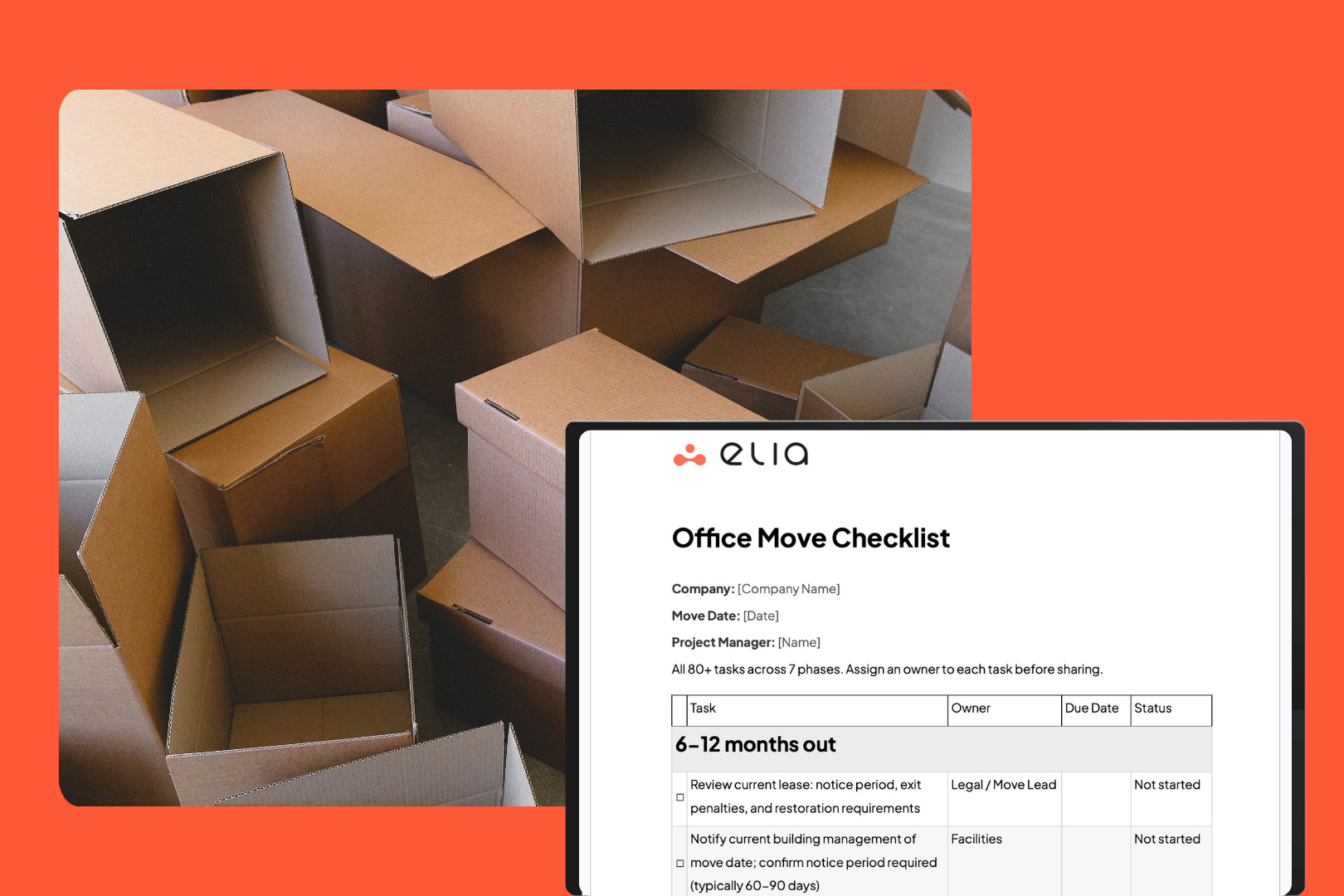
All 80+ tasks across 7 phases, with columns for owner, due date, and status. Fill in your move date, assign an owner to each task, and it's ready to use as a team tracker.
Before you look at new spaces, find out what you owe when you leave the current one. Most leases say you have to put the space back the way you found it (bare walls, no partitions), and that can cost more than the move itself. Get that number into your budget before you sign anything new. Notice periods are usually 60 to 90 days, so let building management know early.
Responsible: Move Lead / Legal / Finance
3-6 months out
The day you sign the new lease, order the internet. Setup takes 60 to 90 days,and many people forget this. Don't.
Responsible: Move Lead / IT / Facilities
1-3 months out
Give IT more lead time than you think they need. The Wi-Fi survey, equipment labeling, and workspace software all need to be done before moving day.
Responsible: IT / Facilities / HR / Operations
Final 2 weeks
Run a full tech dry run. Every problem you find now takes minutes to fix. The same problem on move day takes hours.
Responsible: Move Lead / IT / Facilities
Move day
Have IT on site before employees arrive. Connectivity and device setup come first. Everything else gets managed as it comes up.
Responsible: Move Lead / IT / Facilities
Week 1
The first week is mostly firefighting. Collect what's not working, fix what you can quickly, and set a realistic timeline for the rest.
Responsible: Move Lead / HR / Facilities / Operations
First 60–90 days
You have about 2 months before the space feels settled. Make changes now while it's still easy. Look at what the booking system and sensors are showing.
Every move that goes well has one person who owns it end to end. Someone who can make decisions, keep vendors moving, and be the point of contact for IT, HR, Facilities, and Finance all at once. The checklist doesn't tell you who that should be. That part's up to you. The planning guide covers the thinking behind each phase if you want more context.
Haven't sorted the workspace software yet? elia covers desk booking, rooms, visitor management, and sensors in one place, including the hardware. Take a 2-minute tour, or book a demo if you'd rather see it live.
Tamara Zhostka
is a Content Marketing Specialist at elia. With 10+ years in content marketing, she writes about workplace trends and the tools that help teams work smarter. Part strategist, part storyteller, Tamara brings equal amounts of data, creativity, and a little Moon Prism Power to every piece she creates. 🌙✨
Share
Contents
Subscribe to our newsletter
Subscribe to the elia newsletter for exclusive product updates and industry best practices. You can unsubscribe at any time.
Thank you! You're subscribed.
Oops! Something went wrong while submitting the form.
Frequently Asked Questions
Answers to Your Common Queries
How far in advance should you start planning an office move?
Who should be involved in planning an office relocation?
What's the biggest mistake companies make when moving offices?
How long does an office move take from start to finish?
How should I communicate the office move to employees?
What moving insurance do I need for an office move?




.png)