See what a pilot can turn into
Start with the teams that need it most. If it works, scale it.


In early 2023, Quebecor ran a pilot with elia in 2 Montreal offices. It went well enough to take company-wide. By 2024, elia was live across headquarters and subsidiaries.

in 2023
in reservations during pilot
after space consolidation
Quebecor is a Canadian telecommunications, entertainment, and media company. Its brands include Videotron, TVA, Le Journal de Montréal, and Le Journal de Québec. Over 10,000 people work across the company, with headquarters in Montreal.
Quebecor had a workspace booking tool that was only partially used by employees. With 10,000 people across multiple offices on a hybrid model, low adoption meant the real estate team had no reliable picture of how space was being used.
The company needed a replacement with two jobs: simple enough that employees would actually book, and detailed enough to give administrators real visibility into office activity across a large portfolio.
Quebecor's requirements went beyond getting people to reserve desks. The team needed usage data to make decisions about its office portfolio, and any new platform had to drive adoption quickly across a large, varied workforce:
In early 2023, Quebecor and elia launched a pilot across 2 Montreal offices with selected teams. The focus was on adoption: whether a simpler, more visible platform would change how employees used the office.
Workstation and meeting room reservations went up 304% within a few months. Employees could see when colleagues were planning to come in and book a nearby desk. No training needed.
Those results made the decision to scale straightforward. Currently, elia is live across Quebecor's headquarters, additional administrative buildings, and its subsidiaries: 7 active sites and 1,922 bookable desks.
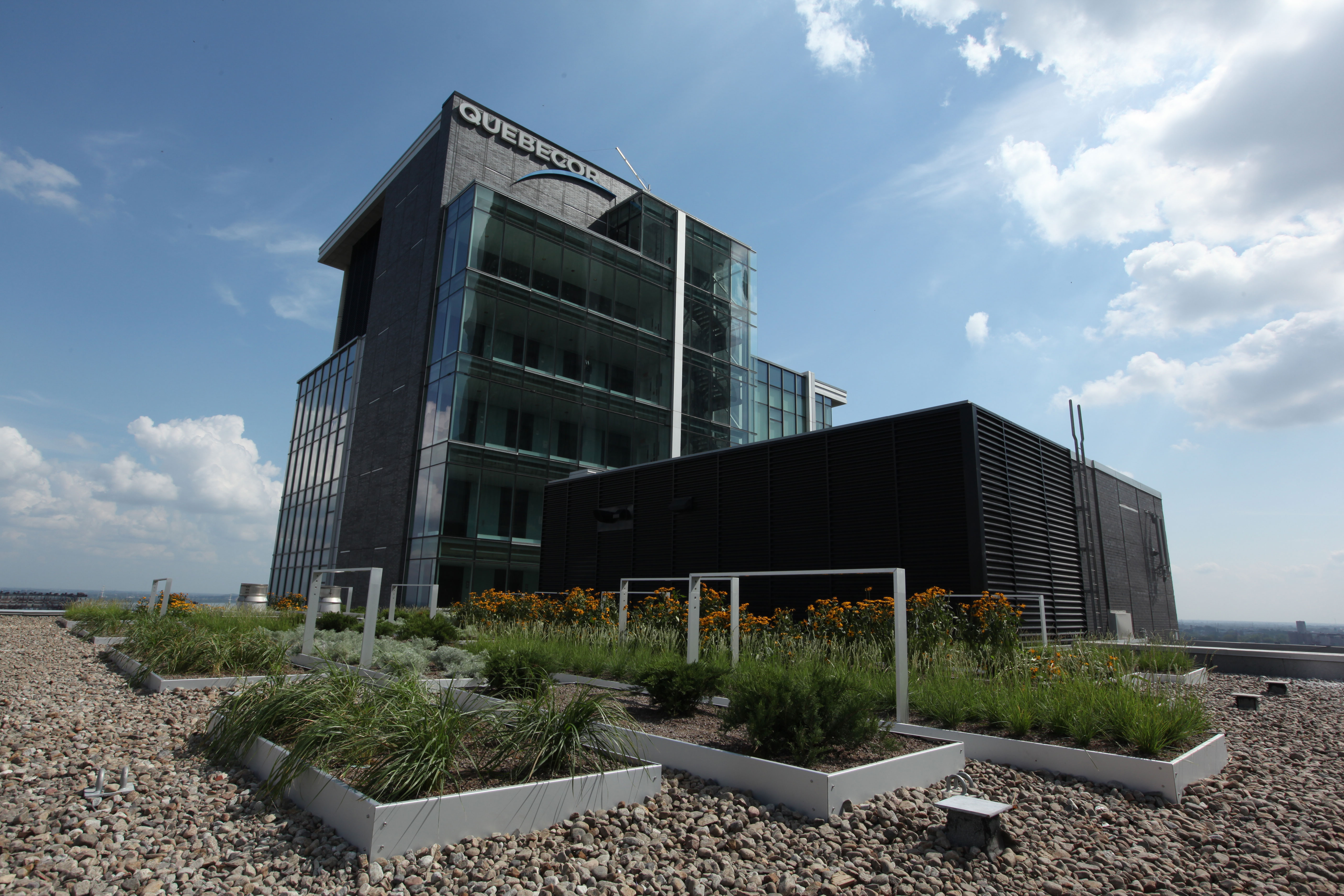
Quebecor deployed elia to improve the booking experience for employees and give the real estate team the data to act on.
The real estate team needed more than headcounts. They needed to know which buildings were being used, when, and at what rate.
Through elia's statistics dashboard, administrators track desk and meeting room booking rates across all sites, filtered by date and workspace. That gave the team a consistent read on activity across 7 locations.
Employees needed a reason to check the platform before deciding whether to come in.
Staff could see who had booked before leaving home, reserve a desk near their team, and plan office days around the people they needed to see. The floor plan was visible on screen and booking took a few clicks. Adoption was immediate across both pilot offices.
As occupancy data came in, the real estate team got a clear picture of which buildings were consistently underused. That data supported a decision to centralize administrative teams at the headquarters on Rue Saint-Jacques. Teams working in quieter locations moved to the main office. Leases on underused buildings were released, and energy consumption and carbon footprint came down across the portfolio.
Quebecor's case is a useful example of what a workplace platform can do beyond reservations. The pilot proved adoption was possible at scale. The occupancy data made real estate decisions defensible. The two things together gave the company a better picture of its offices than it had before.
Start with the teams that need it most. If it works, scale it.