Contents
Subscribe to our newsletter
Subscribe to the elia newsletter for exclusive product updates and industry best practices. You can unsubscribe at any time.
Thank you! You're subscribed.
Oops! Something went wrong while submitting the form.

.png)
Hot desking and activity-based working are both flexible working strategies, but they serve different purposes. The concept of hot desking first took root in 1993 when a Chicago-based IBM business unit utilized the practice. In hot desking, employees do not have a designated desk; instead, multiple employees may use the same workstation on an as needed basis, either first-come, first-served or through reservations. This flexible desk allocation is often incorporated alongside other systems found in hybrid offices, such as office hoteling (see our office hoteling vs hot desking comparison).
Activity-based working (ABW) was originally defined by Erik Veldhoen in 1994 as part of his book, The Demise of the Office. ABW is a comprehensive workplace design philosophy that provides multiple specialized zones such as quiet rooms, collaborative areas, meeting spaces, and social hubs where employees choose different settings based on the specific task they need to accomplish. It encourages employees to be physically active by moving between different zones and often utilizes shared desks as flexible workstations. Activity-based working aims to enable the use of in-person office time to be as efficient as possible. Many companies have started implementing activity-based working principles without even realizing it as traditional work environments grow more obsolete.
The key difference is scope. Hot desking addresses desk allocation, while activity-based working redesigns your entire office space around work activities. Traditional hot desking can be a component of activity-based working. Flexible working can serve as an employee benefit that helps attract and retain talent. In many cases, employees can perform their tasks in the same way as in traditional setups, but with added flexibility. The productivity boost from tailored workspaces makes sense, given the alignment between environment and task. This guide compares both approaches so you can determine which workplace model aligns with your organization’s needs, culture, and goals.
By the end, you will understand which model drives better employee satisfaction, productivity, and space utilization for your specific situation.
Hot desking:
Hot desking is a flexible seating model where employees do not have an assigned desk. The focus is on desk allocation efficiency and space utilization. It can be first-come-first-served or reservation-based through desk hoteling. Hot desking primarily addresses the question of where employees sit when they arrive at the office. Desks are largely interchangeable, consisting of standard office workstations. This approach is often paired with hybrid work and remote working policies as a tactical solution for reducing operating costs and office space needs.
Activity-based working:
Activity-based working is a holistic workplace strategy built around diverse work activities. It provides multiple work settings designed for different tasks including quiet rooms for focused work, collaboration hubs for teamwork, meeting rooms for discussions, phone booths for private calls, and social areas for informal connection. Employees move between zones throughout the day based on work tasks. ABW addresses the question of what work employees are doing and where they can do it best. Different settings have distinct purposes and office design elements. This approach promotes agile working and employee autonomy as a strategic method to enhance employee well-being, productivity, and space optimization.
Key distinction:
Hot desking is a seating strategy. Activity-based working is a workplace philosophy that often incorporates hot desking as one element within a broader ecosystem of purpose-built work environments.
Hot desking philosophy:
Cost reduction and space efficiency are primary drivers of hot desking. This model adapts to hybrid work reality where not everyone is in the office simultaneously. Hot desking democratizes workspace by eliminating hierarchy in desk assignment. It represents a pragmatic response to changing work patterns with a mindset that organizations do not need a desk for everyone. The approach reduces real estate footprint and fixed costs.
Activity-based working philosophy:
Employee satisfaction and productivity enhancement are the primary drivers of activity-based working. ABW represents recognition that different tasks require different settings. It empowers employees to design their own work experience and represents a proactive investment in employee well-being and engagement. The mindset is that organizations need diverse environments to support diverse work. ABW creates a competitive advantage through superior work environment with a focus on work style diversity and individual preferences.
Strategic positioning: Hot desking solves space problems while activity-based working enhances work experience.
Hot desking design:
Hot desking uses standard desk configuration where all desks are largely identical.
Organizations may designate quiet versus collaborative areas, but desks remain similar. This model features minimal variety in workspace types. Storage solutions such as lockers accommodate personal belongings. Basic office infrastructure includes Wi-Fi, docking stations, and monitors. Organizations can repurpose existing office layout with minor modifications. Meeting rooms remain separate, traditional spaces.
Activity-based working design:
Activity-based working requires extensive variety of different settings across office space:
Each zone has specific task-appropriate features (lighting, acoustics, furniture, technology). The approach requires significant office design investment and space planning. You may include outdoor work spaces for well being benefits. The design considers sensory experience like temperature, noise levels, and natural light.
Design verdict: Hot desking emphasizes efficiency-focused uniformity while activity-based working emphasizes experience-focused diversity.
Hot desking technology:
Hot desking needs optional basic desk booking system ($0-8/user/month). You might want real-time desk availability tracking (optional). Cloud-based tools enable mobile work. Standard office IT infrastructure suffices. Minimal technology overhead is possible. Total investment runs $0-10K annually for small-medium companies.
Activity-based working technology:
Activity-based working requires a robust space management platform because employees must be able to find, book, and use multiple space types, including desks, meeting rooms, quiet rooms, and collaboration zones. Booking, wayfinding, and utilization analytics are essential to prevent overcrowding and underused spaces. Meeting room management is especially critical in ABW environments. Explore this capability here: Meeting Room Booking Software. Total investment ranges $25K-100K+ annually depending on scale.
Technology verdict: Hot desking can succeed with light technology, while activity-based working depends on a strong digital platform to function at scale.
Hot desking implementation:
Hot desking is relatively quick to implement and involves limited complexity. The process typically begins with assessing current attendance patterns over two to three weeks, followed by determining the appropriate desk ratio and removing assigned seating within one to two weeks. An optional desk booking system can then be deployed in two to four weeks, if needed. The rollout concludes with a formal launch supported by clear desk policies and etiquette guidelines, usually taking about one week. In total, hot desking can be fully implemented within six to ten weeks. Employee training requirements are minimal, as the model relies more on a fast cultural shift than on complex change management.
Activity-based working implementation:
Activity-based working requires a much longer and more structured implementation. It starts with extensive employee research to understand work patterns, task types, and preferences, which typically takes six to eight weeks. Based on this data, workplace neighborhoods are designed over the following eight to twelve weeks, often leading into space renovations or reconfigurations that can take 12 to 24 weeks. Technology infrastructure and booking systems are then deployed over six to eight weeks, followed by comprehensive employee training on ABW principles and space usage, which usually takes four to six weeks. Many organizations run a pilot program with feedback loops for eight to twelve weeks before moving into a full rollout with ongoing iteration. Overall, reaching a mature ABW environment typically takes 12 to 18 months.
Implementation verdict: Hot desking is fast and tactical, while ABW is transformational and takes sustained commitment.
Hot desking costs:
Hot desking typically comes with relatively low costs: for a 100-person organization, upfront expenses generally range from $10K to $35K, covering mostly optional technology ($0–10K/year), minimal space modifications like removing nameplates and adding lockers ($5–15K), and light change-management efforts such as training and communications ($5–10K). Ongoing operating costs are minimal.
Hot desking savings:
Hot desking can unlock significant savings, primarily through real estate optimization: by reducing the number of required desks by 20–40%, a 100-employee organization can eliminate 30–40 desks, translating into approximately $180K to $320K in annual savings (at $6–8K per desk per year), with additional reductions in furniture, equipment, and utility costs, often resulting in an ROI within 2 to 6 months.
Activity-based working costs:
Activity-based working requires a more substantial investment: for a 100-person organization, upfront costs typically range from $300K to $1.5M+, driven by workplace strategy and design consulting ($25–75K), renovations or reconfigurations ($200K to $1M+ depending on scale), specialized furniture ($50–150K), technology setup ($25–100K plus $15–50K annually), and extensive change-management programs ($25–75K). Ongoing costs are also higher, including increased cleaning for diverse spaces and recurring technology subscriptions.
Activity-based working savings + value:
Activity-based working delivers both financial savings and strategic value: by enabling 30–50% space optimization, a 100-employee organization can save $250K to $400K per year through desk reduction and better use of remaining space, while also benefiting from reported 13–17% productivity gains, improved employee retention (an estimated $50K–150K annually), and stronger talent attraction. Although the ROI timeline is longer—typically 18 to 36 months—the long-term impact is often greater than hot desking alone.
Cost verdict: Hot desking wins on quick ROI and lower investment; ABW requires substantial capital but delivers broader organizational benefits beyond cost savings.
Hot desking employee experience:
From an employee experience perspective, hot desking creates a simple but repetitive daily flow where employees arrive, find a desk, set up, work, then clear the space, which can introduce uncertainty on peak days and a loss of personal space or customization. While it can encourage cross-team interaction by varying desk neighbors, it may also feel impersonal and create challenges around belonging, making it best suited for mobile, autonomous employees who are comfortable with minimal routine, with common complaints including missing a personal workspace and feeling stressed about finding a desk.
Activity-based working employee experience:
Activity-based working offers a more dynamic daily experience where employees assess their tasks, choose the most appropriate zone, and move between settings as their work changes, giving them autonomy to shape their ideal work environment throughout the day. The variety supports different work styles, enables both focused and collaborative work, and encourages physical movement, though it does require a learning curve and can create challenges like competition for popular spaces; it works best for knowledge workers with diverse tasks and flexible teams, with feedback often praising the freedom to choose where to work while noting occasional difficulty finding the right space.
Employee satisfaction research:
Employee satisfaction research shows mixed outcomes for hot desking, with employee satisfaction typically ranging from 40 to 60 percent depending on how well it is implemented. In contrast, activity-based working is associated with an average 17 percent increase in workplace satisfaction and a 13 percent productivity boost according to a Veldhoen + Company study, largely because ABW proactively addresses employee needs while hot desking requires employees to adapt to constraints.
Experience verdict: Hot desking can negatively impact employee satisfaction when poorly implemented, while activity-based working generally enhances employee well-being and overall satisfaction when done properly.
Hot desking productivity:
Hot desking can negatively affect productivity, particularly on busy days when time is lost searching for available desks and on daily setup and teardown routines. Constantly changing desk neighbors can increase distractions and make spontaneous coordination with co workers harder, and because the model offers no inherent productivity gains and is primarily a cost-driven approach, it may reduce output when employees feel unsettled or displaced, especially for deep work that benefits from a consistent environment.
Activity-based orking productivity:
Activity-based working tends to enhance productivity by giving employees access to task-appropriate settings that improve focus and efficiency, from quiet rooms that support deep work to collaborative areas that enable effective teamwork. The ability to move between zones increases alertness, and research consistently shows average productivity gains of 13 to 16 percent, with employees reporting higher work quality when they can match their environment to the task at hand throughout the day.
Productivity verdict: Hot desking is generally neutral, while activity-based working actively enhances productivity by providing optimized work settings aligned with the task at hand.
Hot desking collaboration:
Hot desking can make collaboration more challenging, as teams often scatter across the office, making it harder to sit together or coordinate impromptu discussions and requiring extra effort to locate colleagues. While the rotating desk setup can encourage cross-departmental connections and occasional networking benefits, it may also disrupt team cohesion, create silos due to seating unpredictability, and introduce a culture shift that feels more transactional than community-building.
Activity-based working collaboration:
Activity-based working strengthens collaboration by providing dedicated spaces designed specifically for teamwork, along with meeting areas optimized for different group sizes and collaboration styles. By allowing teams to coordinate within shared neighborhoods while also benefiting from social zones that encourage informal knowledge exchange, ABW preserves team identity, supports both focused and collaborative work, and helps create a more engaging and vibrant workplace culture.
Culture verdict: Hot desking can weaken team culture if it is not carefully managed, while activity-based working strengthens collaboration and culture through intentional, purpose-driven space design.
Hot desking space stilization:
Hot desking improves space utilization primarily by reducing the number of empty desks, typically achieving a ratio of 0.6 to 0.8 desks per employee. While this optimizes desk count, it offers limited flexibility since desks remain desks, does not meaningfully address usage patterns, and can still create capacity issues on high-attendance days, leaving questions about how effectively the remaining space is truly used.
Activity-based working space utilization:
Activity-based working enables comprehensive space optimization by aligning the mix of work settings with actual employee needs, typically achieving a desk ratio of 0.5 to 0.7 while allocating more space to a variety of purpose-driven zones. By revealing underutilized areas that can be repurposed and allowing spaces to be reconfigured as needs evolve, ABW maximizes the value of every square foot and provides clear insight into which settings should be expanded or reduced.
Utilization verdict: Hot desking primarily reduces desk count, while activity-based working optimizes the entire office space ecosystem to deliver maximum value from every square foot.
Hot desking works best for:
Hot desking works best for small to medium organizations with a high share of remote or field workers, particularly startups or budget-constrained companies prioritizing cost efficiency over workplace experience. It is especially well suited to environments with relatively uniform job roles, pragmatic and minimalist cultures, or organizations looking to test flexible working as a first step before making larger workplace investments.
Activity-based working works best for:
Activity-based working works best for medium to large organizations with the resources to support transformation, particularly those with knowledge workers who perform a wide range of tasks throughout the day. It is well suited to companies that prioritize employee experience, autonomy, and well being, are committed to agile and innovative ways of working, and are willing to make a long-term investment in workplace excellence, especially in talent competitive industries where the workplace is a key differentiator.
Cultural fit verdict: Hot desking aligns best with pragmatic, cost-focused cultures, while activity-based working is better suited to employee-centric, innovation-oriented organizations.
Hot desking challenges:
Activity-based working challenges:
Challenge verdict: Hot desking presents simpler, more straightforward issues to solve, while activity-based working involves greater complexity but offers significantly more upside when those challenges are successfully addressed.
A simple decision framework can help guide the choice. If your primary goal is cost reduction, hot desking is usually the right fit, whereas a focus on employee experience points toward activity-based working. Organizations with limited budgets or urgent timelines tend to benefit more from hot desking, while those with the resources and patience for longer-term change are better suited to ABW. The nature of work also matters: uniform roles align well with hot desking, while diverse, task-driven work favors ABW. Finally, cultural fit is key, with pragmatic cultures leaning toward hot desking and employee-centric cultures thriving with ABW.
For a deeper dive, link internally to your Hot Desking Pros and Cons blog post to help readers fully understand the trade-offs.
Core principle: Hot desking manages general workspace allocation, while activity-based working provides specialized settings designed for specific task types.
How it works:
Desks operate on a hot desking or desk hoteling basis, meaning there are no assigned desks, but desks are only one setting within a broader ABW ecosystem. Employees choose the environment that best supports their current task, whether that is a hot desk in an open area, a focus room for deep concentration, a collaboration zone for teamwork, a meeting space for discussions, or a social area for informal breaks. Traditional hot desking focuses on the question of “which desk,” whereas an integrated model reframes the decision as “which setting best supports my work right now.”
Benefits of integration:
This approach combines the cost efficiency of hot desking for general desks with the experiential value of ABW through diverse, purpose-built zones. It introduces flexibility across two dimensions, seating assignment and setting type, while satisfying both cost-driven and experience-driven stakeholders.
Implementation: Organizations typically start with hot desking, progressively add activity-based zones, and eventually unify both into a single workplace strategy.
The reality: Most successful activity-based working implementations already rely on hot desking principles for desk allocation. The two models are complementary, not competing.
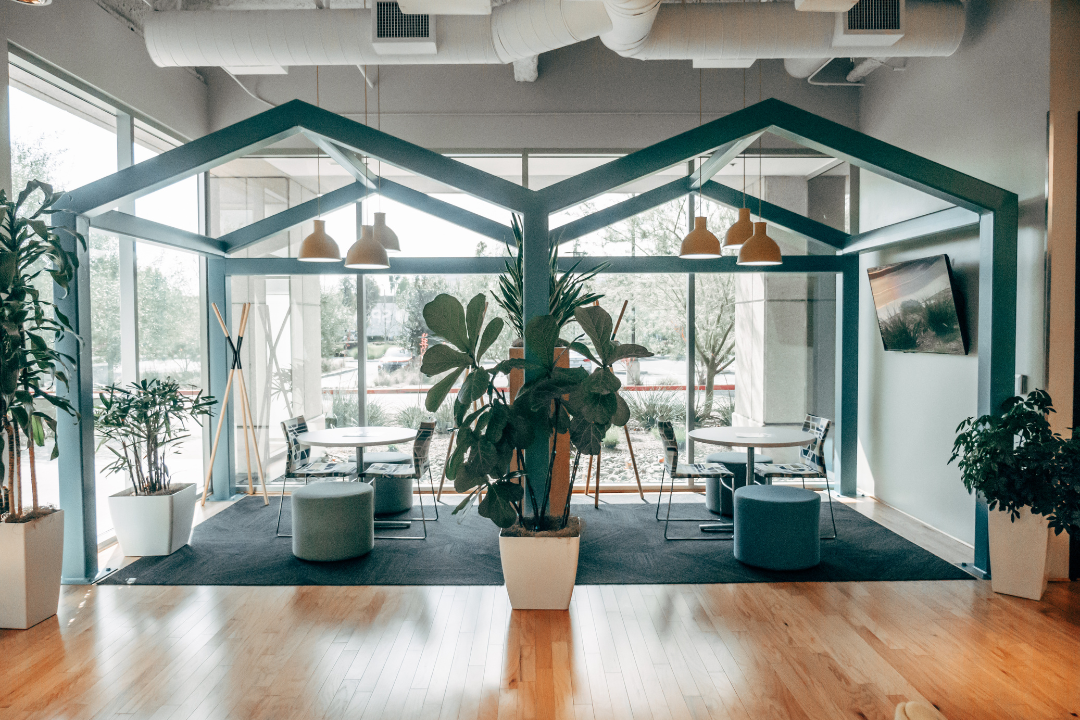
Start by understanding how your office is actually used today. Analyze attendance patterns and existing space utilization, then survey employees to capture work location preferences and common concerns. Based on your hybrid work policy, calculate an appropriate desk-sharing ratio and decide whether desks will operate on a first-come-first-served basis or through a reservation-based desk hoteling model. At this stage, it is also critical to define clear desk policies and etiquette guidelines and plan practical storage solutions such as lockers, mobile caddies, or shared storage areas.
Once the strategy is set, prepare the physical environment. Remove assigned seating and nameplates, install lockers at a one-to-one ratio with employees, and standardize desk technology with monitors, docking stations, and reliable Wi-Fi. If desk hoteling is part of the approach, implement a simple booking system. Hygiene should be highly visible, with cleaning stations and sanitizing supplies available at every desk.
Clear communication determines adoption success. Explain the rationale for hot desking to employees with a focus on benefits rather than restrictions. Provide hands-on training for any booking tools, distribute desk etiquette guidelines, and create open channels for questions and feedback. Identifying and training “hot desking champions” helps reinforce best practices peer-to-peer.
Begin with a soft launch by allowing volunteers to test hot desking for a short period. Use this phase to gather feedback, identify friction points, and refine policies, desk ratios, or storage solutions. Once adjustments are made, move to a full rollout across the organization while monitoring desk availability, confusion, or resistance daily.
Hot desking is not a set-and-forget model. Track desk utilization, employee satisfaction, and recurring complaints, and adjust desk ratios as needed. Address hygiene concerns proactively, evolve policies based on real usage, and celebrate early wins to reinforce adoption. Learn more by reading our How to manage hot desking blog post.
Begin with comprehensive employee research, including task analysis, work style preferences, and existing pain points. Study how desks, meeting rooms, and shared spaces are currently used, and analyze utilization data where available. Benchmark ABW case studies from comparable industries and engage a workplace design consultant experienced in activity-based environments. Define success metrics early, covering satisfaction, productivity, and space efficiency.
Translate research into a workplace strategy. Determine the right mix of settings, from focus zones and collaboration areas to social hubs and quiet rooms, and allocate space accordingly. Design office neighborhoods, plan technology requirements for each setting, and consider sensory factors such as acoustics, lighting, and thermal comfort. Finalize detailed design plans, secure budget approval with clear ROI projections, select technology platforms, and formalize ABW policies and usage guidelines.
Reconfigure or renovate the office according to the approved design. Install specialized furniture and fixtures, deploy booking and space management systems, implement wayfinding signage and mobile tools, and install utilization sensors to support ongoing optimization. All systems should be thoroughly tested before launch.
Adoption is the hardest part of ABW. Develop a comprehensive training program covering the philosophy of activity-based working, how to choose the right setting for each task, booking processes, and shared space etiquette. Create a network of ABW champions to model behaviors, conduct guided walkthroughs of the space, and provide ongoing support through guides, videos, and FAQs.
Launch ABW with a pilot group, such as one department or floor. Gather feedback through surveys, focus groups, and observation, and closely monitor utilization across all settings. Identify underused or overcrowded zones, resolve technology issues, and refine policies based on real behavior rather than assumptions.
Expand ABW gradually across the organization to avoid change fatigue. Maintain continuous support through champions and IT teams, hold regular check-ins with employees, and adjust space configurations based on usage data.
Review utilization data and employee feedback monthly, adjust space allocation quarterly, and refresh workplace strategy annually as organizational needs evolve. Share success stories internally to reinforce the value of ABW and demonstrate ROI.
Successful ABW programs share common traits: strong employee involvement in design decisions, visible leadership adoption, patience for a 6–12 month behavioral transition, data-driven iteration, and ongoing communication and education.
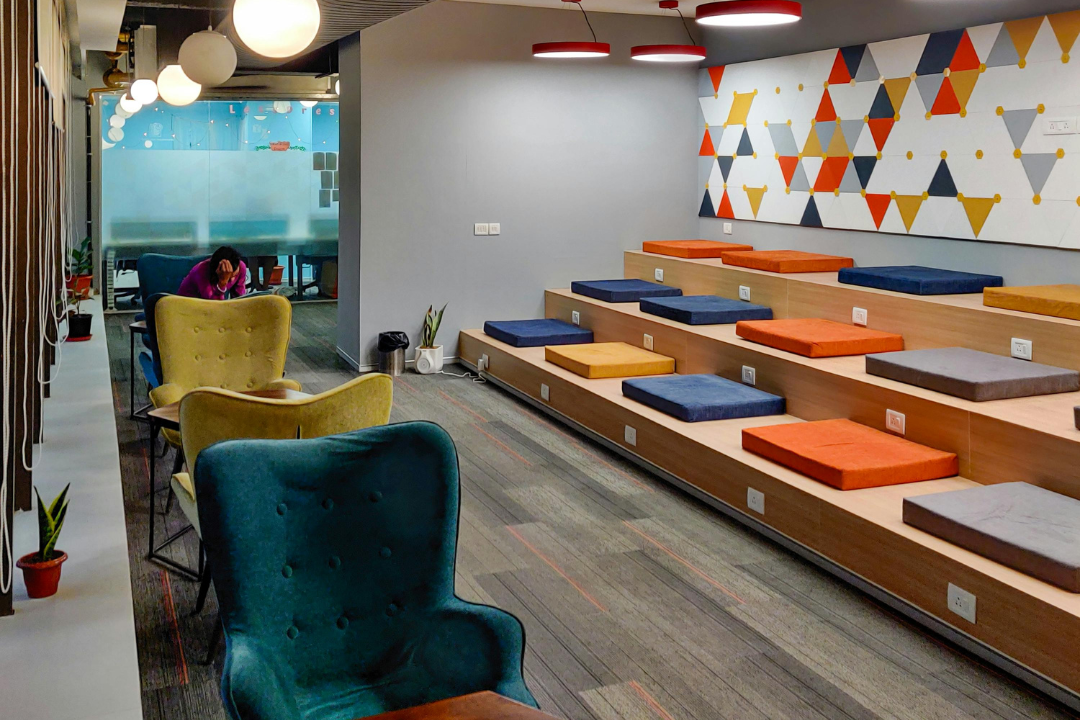
Space utilization:
To measure hot desking effectiveness, focus first on space utilization. Target a desk occupancy rate of 65 to 80 percent on average and 85 to 95 percent on peak days to balance efficiency and availability. Track your desk sharing ratio, starting conservatively at 0.7 to 0.8 desks per employee, then optimize to 0.6 to 0.7 after three to six months of usage data. Learn more about Desk Sharing Ratios on our blog.
Finally, monitor square footage reduction compared to assigned seating and real estate cost per employee, which should decrease by 20 to 40 percent with a well implemented hot desking model.
Employee experience:
Employee experience metrics help ensure hot desking is not achieved at the expense of morale. Track workspace satisfaction scores through quarterly surveys and monitor complaints about desk availability, keeping reported issues below 5 percent of employees. Pay close attention to perceived fairness in desk allocation and sense of belonging scores, as declines in these indicators often signal the need for policy or capacity adjustments.
Operational:
Measure the time employees spend searching for a desk, aiming to keep it under five minutes, and track hygiene and cleanliness satisfaction to ensure shared spaces feel comfortable. Also monitor storage adequacy ratings and the frequency of technology issues at shared desks, as these are common sources of frustration in hot desking environments.
Financial:
Financial metrics quantify the business impact of hot desking. Track total real estate cost savings, account for technology costs if desk hoteling software is used, and monitor the ROI timeline, with a target of becoming positive within 6 to 12 months. Cost per square foot should steadily improve as space is optimized.
Space utilization:
Measuring ABW success starts with understanding how space is used. Utilization rates by zone type help identify overused and underused settings, while tracking employee movement between zones reveals how well the workplace supports different activities throughout the day.
Meeting room booking rates and capacity utilization indicate whether collaborative spaces are appropriately sized, and the ratio of collaborative to focus space usage shows if the environment supports both teamwork and individual work. Ultimately, effective ABW should result in fewer empty desks across all settings, enabled by better space matching using tools like Desk occupancy sensors. Learn more about how occupancy data improves workplace decisions in this desk occupancy blog post.
Employee experience & satisfaction:
Overall workplace satisfaction should show a measurable improvement compared to baseline levels, typically in the range of 15–20%. Task-to-setting match scores reveal whether employees feel they have access to the right spaces for their daily work, while autonomy and empowerment ratings reflect how much control they have over where and how they work. Physical movement and well-being indicators, along with job satisfaction and employee engagement scores, help confirm whether the workplace positively supports both performance and health.
Productivity & performance:
Productivity and performance metrics help validate the impact of ABW on daily work. Self-reported productivity should show a 10–15% improvement compared to baseline, supported by task completion rates and quality measures. Collaboration effectiveness ratings indicate how well teams work together, while focus work quality scores assess the environment’s ability to support deep, uninterrupted work. Innovation metrics, such as new ideas generated and cross-team projects, provide additional insight into longer-term performance gains.
Organizational:
Organizational metrics highlight the broader impact of ABW over time. Improvements in employee retention signal a healthier workplace, while recruitment metrics such as time-to-hire and offer acceptance rates reflect the organization’s attractiveness to candidates. Tracking absenteeism trends helps identify changes in employee well-being, and positioning the workplace as a competitive advantage strengthens the company’s ability to attract and retain top talent.
Behavioral:
Behavioral metrics show how well employees are adopting ABW in practice. A high percentage of employees should actively use multiple settings each week, with a target of more than 70% using three or more zones. The learning curve measures how quickly employees adopt ABW behaviors, with fluency ideally reached within three months. Monitoring space-hogging behaviors and compliance with workplace etiquette helps ensure spaces are shared fairly and used as intended.
Financial:
Financial metrics help quantify the business value of ABW. Total real estate cost savings should reflect a 30–50% optimization, driven by more efficient space use. Productivity gains can be translated into increased revenue or output, while reduced employee turnover lowers replacement and onboarding costs. Tracking the ROI timeline is essential, with positive returns typically expected within 24–36 months, alongside improved space utilization efficiency measured by the value generated per square foot.
Comparative benchmark: Track hot desking vs activity-based outcomes if using both models in different offices to quantify ABW premium.
Hot desking works best when speed and cost savings are the priority, while activity-based working focuses on long-term employee experience and productivity. Many organizations start with hot desking and evolve toward ABW over time.
Both models fail without the right technology. Hot desking leads to desk confusion, and ABW spaces go underused without booking and utilization data.
elia simplifies every stage with desk booking, multi-zone management, and real-time analytics. It eliminates desk-hunting, prevents overcrowding, improves team coordination, and proves ROI through space utilization metrics.
Book a demo to see your customized roadmap and join 100 000+ professionals using elia to turn workplace strategy into results.
Answers to Your Common Queries

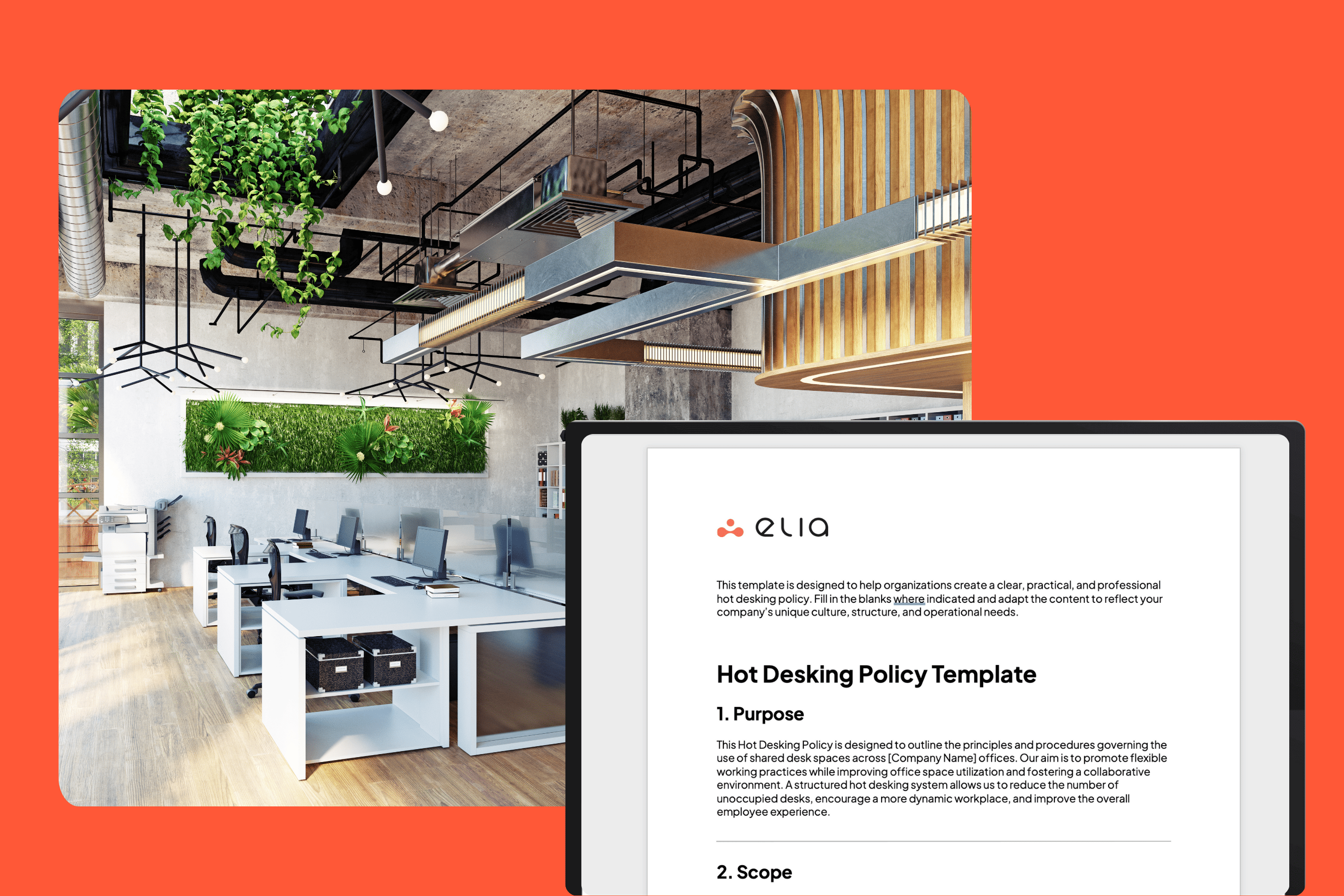
![Hot Desk Booking Template: Free Excel & Google Sheets Download [2026]](https://cdn.prod.website-files.com/64f88f68249f7cafe071d150/68c47d1149fcc0791ada469a_elia%20-%20Hot%20Desk%20Booking%20Template.png)