Contents
Subscribe to our newsletter
Subscribe to the elia newsletter for exclusive product updates and industry best practices. You can unsubscribe at any time.
Thank you! You're subscribed.
Oops! Something went wrong while submitting the form.



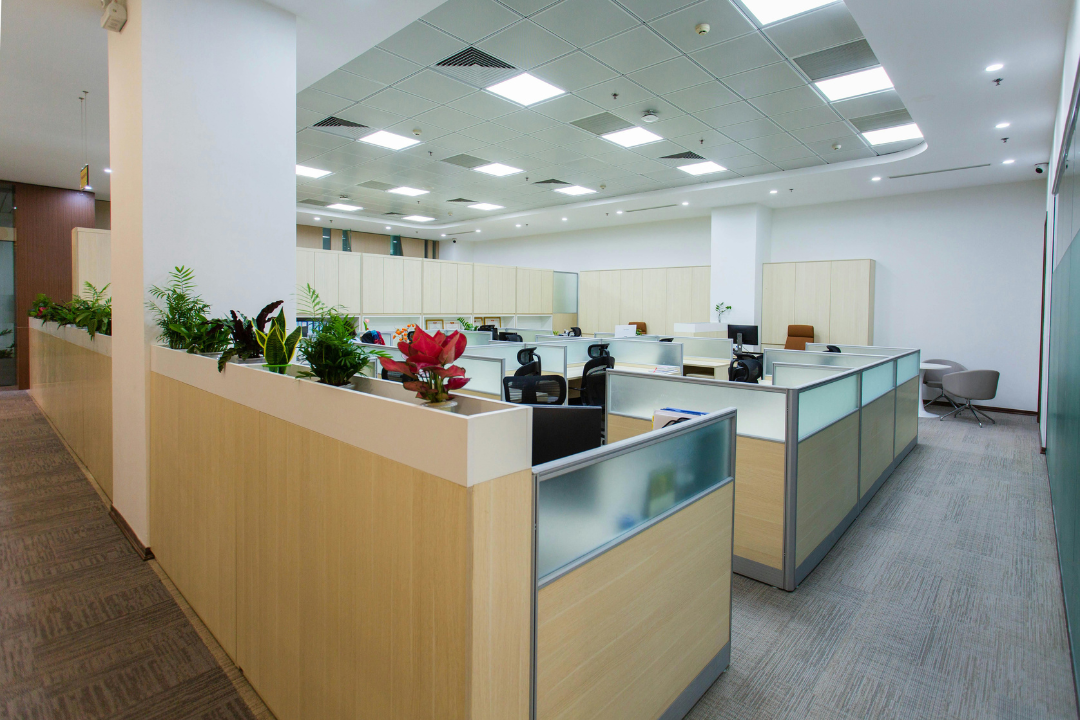
We had an engineering firm come to us a while back that was keen on setting up more workstations for one of their departments. Their facilities team took a walk around the office before signing off, and guess what they found? Around 10 empty desks. In the exact department that had asked for more.
Request denied.
It's a pretty common scenario. But what's not so common is checking to see if the space is even being used. So most companies have no idea what those empty desks are costing them.
Take a 500-person office with a standard 1:1 desk ratio. Mid-market US real estate runs around $5,500/year per desk. At 35% average daily occupancy, 325 of those desks are collecting dust on a typical day, which translates to $1.8M/year in space nobody's in.
We keep bringing this up when companies tell us they need more office space.
One little side note: this is about corporate offices with assigned seating, not coworking spaces. If you're looking at dedicated desk memberships at a WeWork, then this article isn't for you. If you manage a hybrid office, control a floor plan, or you're the person who has to approve (or deny) real estate requests, here's what you'll find:
The $5,500 figure comes from $37/sq ft at 150 sq ft per desk. Pretty standard for a mid-market US office. At 35% average daily occupancy, each dedicated desk sits empty 65% of the time.
Here are some numbers to put it into perspective:
These use $37/sq ft and 150 sq ft per desk. Class A space in New York or San Francisco can run you upwards of $100 to $130+/sq ft. The Canadian national average is around $26/sq ft (CAD), with daily desk occupancy at 41%.
And then, assigned seating makes empty desks invisible. When every desk belongs to someone, you can't tell which ones are in use. The facilities coordinator knew to check because he'd been doing this long enough. Most people just take the team's word for it, ending up with a business problem.
35% is the US average, and a lot of offices are below that, which often surprises people.
Vantage Space studied a large multinational and found 40% desk utilization across their portfolio. They cut their footprint by 30% after that, and productivity didn't even slip. CBRE's 2025 survey found that 25% of companies are still on fully assigned seating, down from 56% in 2023 and 40% in 2024.
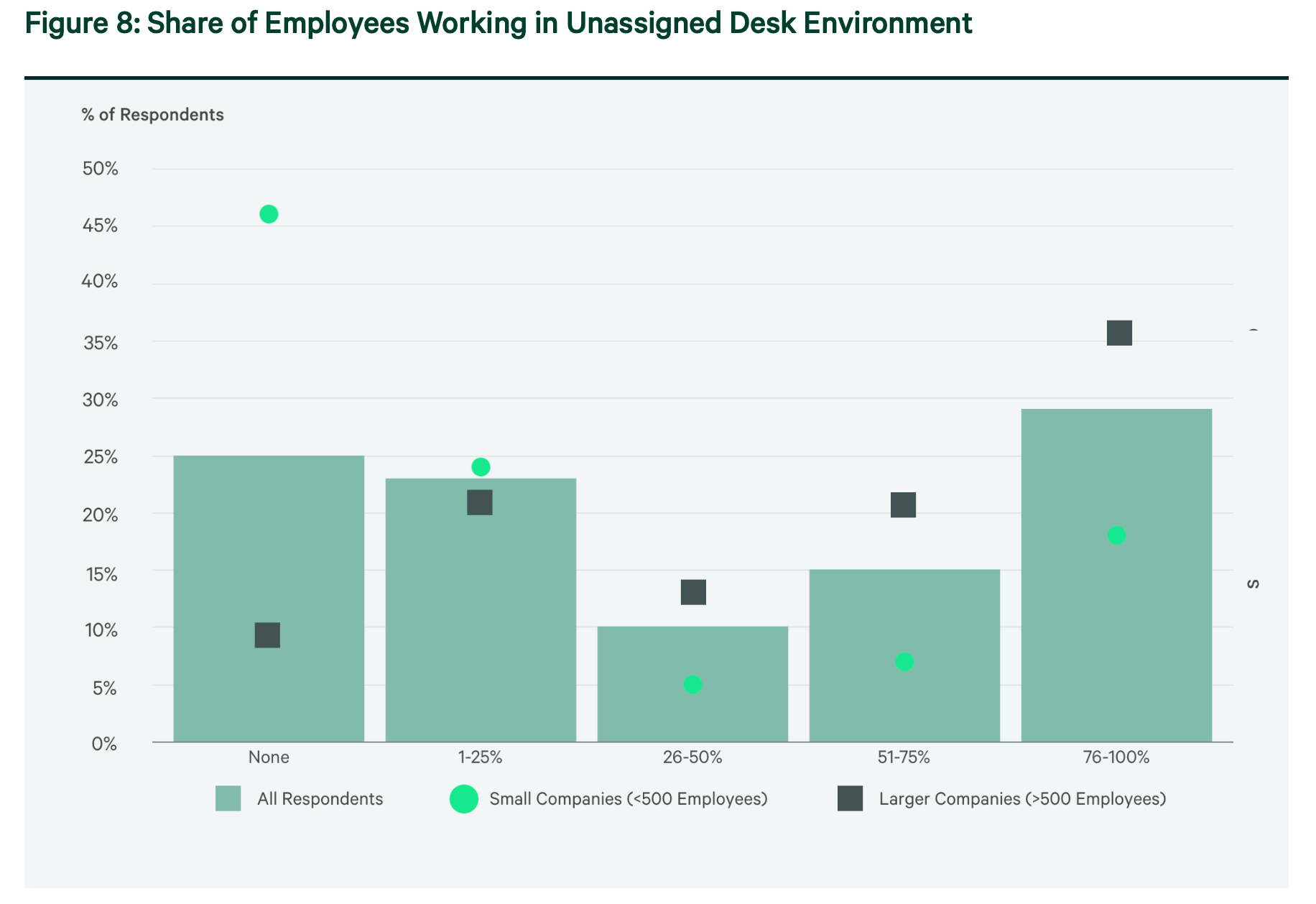
In our experience, the offices most confident about their utilization haven't measured it. Once they do... the number is almost always lower than expected.
In a conversation with a facilities coordinator managing dozens of offices for a company of roughly 5,000 people, we asked about utilization across their Quebec sites. Two offices run the same seating policy. One was pulling about 65% daily occupancy, while the other sat around 25%. And get this, they're only 40 minutes apart.
There's also a weekly pattern that shows up consistently: attendance peaks Tuesday and Wednesday, drops off Monday and Friday. You'd think your lease would adjust for that, but nope.
CBRE predicts that by 2027, 73% of companies expect their desk-sharing ratios to exceed 1.5:1. If 25% are still fully assigned today, there's a lot of ground to cover.
The real estate cost is the number that’s calculable and easy to put in front of a CFO. But there's more going on:
That said, assigned seating isn't all bad news. People like having a place that's theirs. Coming in to your own desk, personal items and belongings right where you left them, no need to decide where to sit. That sense of ownership is real. The benefits are real too: 24/7 access to your workspace, the ability to leave monitors set up overnight, no time wasted on setup every morning.
For roles that need to be in the office 5 days a week, anyone with deep work setups, specialist equipment or accessibility needs, personal desks are a no-brainer. The problem is when they're applied uniformly across offices where only a third of people show up on any given day.
So if it's so expensive, why are we still seeing 25% of companies doing assigned seating?
One of the companies we spoke with had what they called neighborhoods: sections organized by the cost center. Honestly, the logic makes sense. People sat near their teams. No one had to decide where to go. They're phasing it out because some neighborhoods were consistently packed while others sat half-empty, and there was no way to rebalance without dismantling the whole thing.
Switching over has its own set of complications, and hot desking isn’t without downsides either. The empty desks keep on costing either way.
What you should do is look at that desk sharing ratio. At 1:1 assigned seating, you never have to think about it. But once you start questioning the ratio, it becomes the central question. We broke down how to calculate and benchmark yours here.
The desk sharing ratio is employees divided by bookable desks. 1:1 is fully assigned seating. 1.5:1 means 1.5 employees per desk. 3:1 is 3 employees per desk.
For hybrid offices, it sort of breaks down like this:
Small teams of 10 to 20 people rarely feel the pain of a 1:1 ratio. The idle cost stays manageable and the policy overhead isn't worth it. The math starts biting at scale, though: 100+ person offices where those idle desks add up fast.
At the end of the day, what's realistic depends on how each individual site is filling up, not the company-wide average. Office 1 might run a 3:1 arrangement while Office 2 is more like 1.3:1. Give both sites the same ratio and you'd either end up short-changed at Office 2 or be splurging on too many desks at Office 1.
You need to know the specifics on a site-by-site basis. Assigned seating doesn't really give you that. Finding the right fit for your business needs starts with occupancy data. Per site.
Getting away from fully assigned seating doesn't have to mean ripping everything to shreds at once. Some things need to be in place first for it to work properly though.
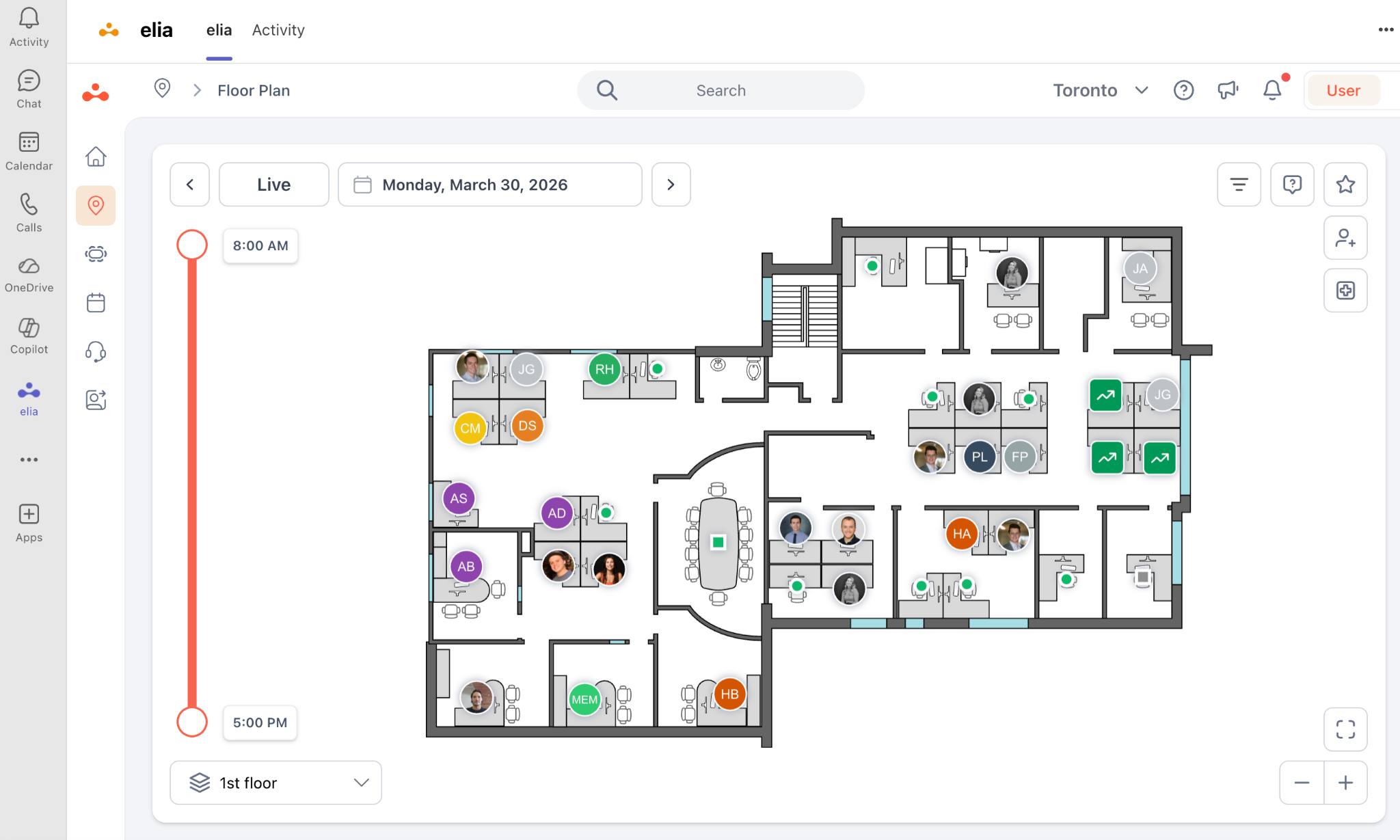
Hot desks without booking software are first-come, first-served. Which is just as problematic as assigned seating, just less predictable. Managing 100 offices in a spreadsheet might catch 12 empty desks in one department, but forgets about the rest. It doesn't scale.
Without a booking system, the same thing happens: people show up on busy Tuesdays with no reserved desk, no idea what was available. When everyone books in advance, facilities can see the load coming. The setup most hybrid offices settle on is desk hoteling: you book when you need a desk and let it go when you're done. That needs booking software to work, obviously.

A common informal rule: if you come in 4 or more days a week, you get an assigned desk. Everyone else books from the shared workspace. Built without software behind it, it breaks down on heavy days.
The policy also needs to handle the edge cases upfront: employees with accessibility needs who require a specific setup, roles with desktop workstations that can't travel, people who are genuinely in every day. Add those exceptions into the policy from the start rather than treating them as workarounds later.
You can track reservations without ever seeing real occupancy. Someone books a desk but doesn't show up. That registers as taken and sits empty all day. If a desk is empty because nobody booked it, you can offer it to a walk-in. If the person who booked it just didn't turn up, your reservation data overstates real demand.
Without being able to tell those 2 apart, space planning gets unreliable. Desk occupancy data closes that gap.
Neighborhood zones by team are the most common solution. Not assigned by name, but enough structure that Engineering knows where to find themselves and Finance has their spot too. When a team reorganizes, you update the zone, not every individual desk. People can still connect with their teams. They just don't need a nameplate on a desk to do it.
Some offices also add phone booths or quiet focus rooms alongside the shared workspace, so people who need uninterrupted time have somewhere to go without needing their own permanent desk.
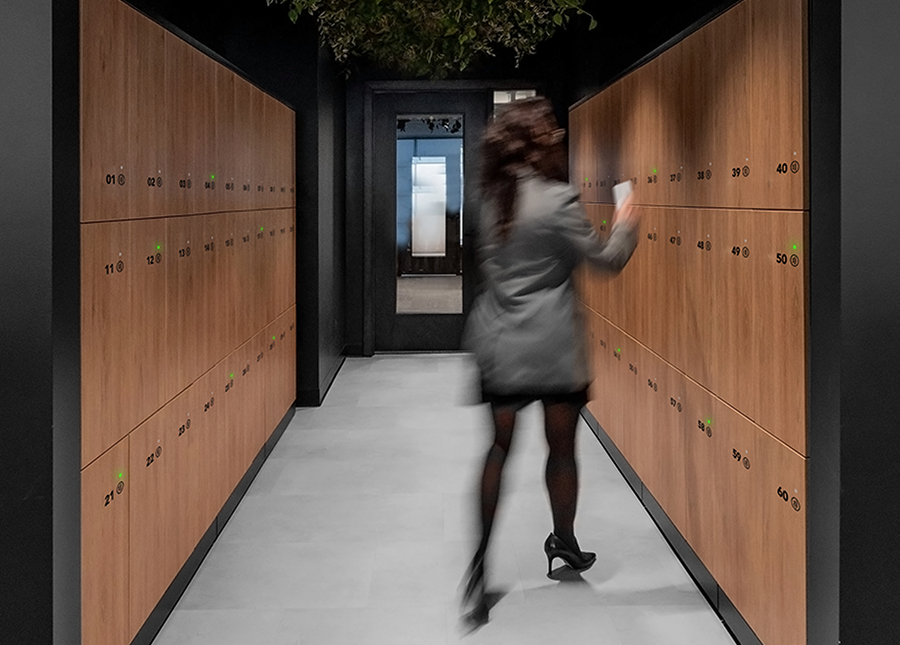
One of the first concerns when you take away assigned desks: "Where does my stuff go?" Lockers or secure personal storage help with that. People can leave belongings without needing a desk to claim as their own.
Québecor has 11,000 employees across 9 buildings and 30 floors. After implementing desk booking, it went up 304%! CISSS improved their desk ratio by 67%. Same pattern in both cases: visibility first & policy work second.
This always comes up in conversations. People think taking away assigned seating means nobody gets their own desk at all. Not true.
Most offices end up somewhere in between fully assigned and fully flexible, and the middle works pretty well.
In elia, you can mark specific desks as permanently assigned to a user while the rest stay in the shared pool. So, a developer with a 4-monitor setup can keep their dedicated desk. The three-days-a-week account manager books from the shared pool. Someone who wants to keep the same spot without a full-on assignment can book the same desk on a recurring basis: preferred location, same spot every week, without it being locked to them permanently.
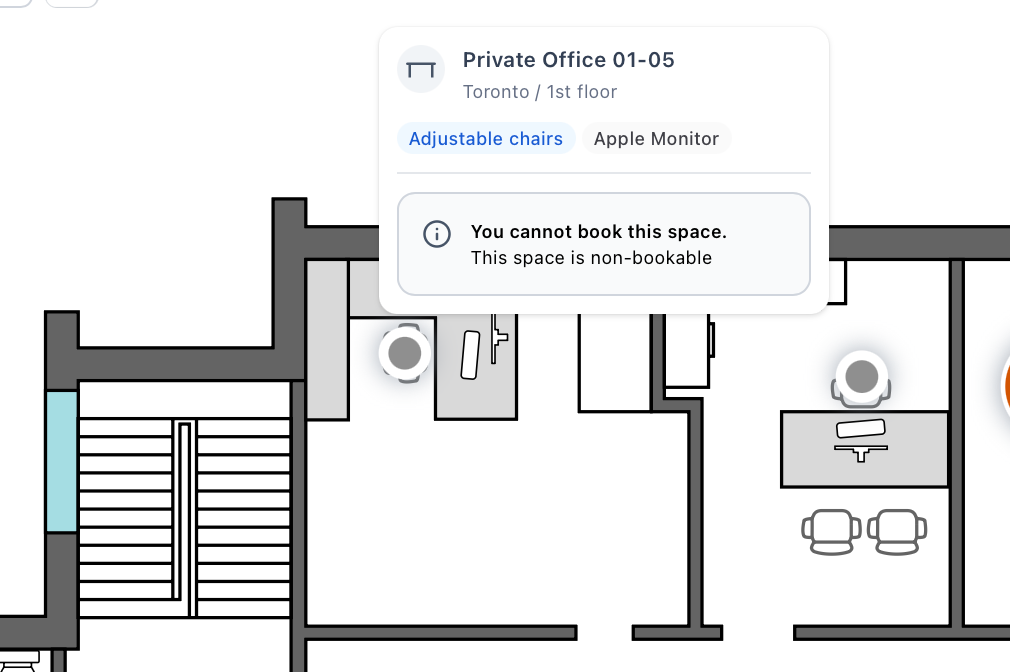
The same model extends to meeting rooms. Teams that need a reserved space for collaboration can book meeting rooms in advance, on a recurring basis or on demand. elia handles both desks and rooms in one place, so you're not managing two separate systems.
The policy rules decide where the line is drawn, and you set the cutoff however makes sense for your office.
What this gets you is fewer empty desks, real occupancy data, a floor plan that can stretch and shrink with the teams, the freedom to handle edge cases without freezing the whole floor plan, and an answer for the people who genuinely need a fixed spot.
If you don't have a utilization rate, 35% is a decent starting point, but badge data gives you a much more reliable indicator. 2 weeks of data is usually enough to see a pattern.
That's what your idle space is costing you, but that's just the beginning. It doesn't account for furniture, cleaning, or the time someone spends shuffling desks every time someone's job changes. But now you have a number to work with and start a conversation.
If we had to sum this up: most hybrid offices are paying for way more space than they're using, and assigned seating is a big reason why they can't see it.
Running the math takes 5 minutes. Getting someone to do it is the hard part.
If you want to see what a realistic ratio looks like for your setup, we have that conversation a lot. And if you're sorting out which roles keep dedicated desks and which move to shared, we compared both models here.
Help teams find the right space, right when they need it.

Answers to Your Common Queries
.png)
